How to Decalcify Your Pineal Gland
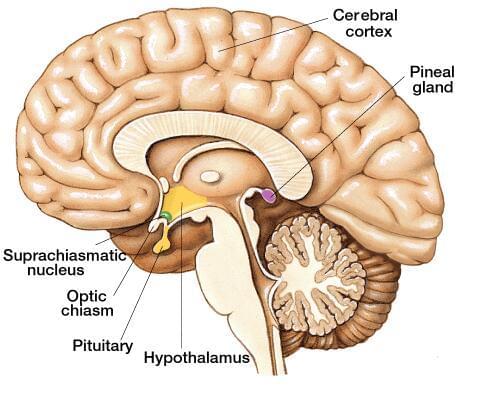
Your pineal gland is a small, pine-cone-shaped gland near the center of your brain. Its main job is to make melatonin, the hormone that tells your body it is night. With age, most people develop calcium deposits in it, and that is what “pineal calcification” means.
This guide covers what calcification is, what the research does and doesn’t show about it, and the habits and products I use to support my pineal gland. I’ve tried to be straight with you about which is which.
What Pineal Calcification Is
Pineal calcification is a build-up of calcium-phosphate crystals inside the gland. It is common: on brain CT scans of 518 adults, 72% had a visibly calcified pineal gland, and the rate climbed steadily with age.[1] It starts early, too. In a study of children it was rare before age 6 (1%) but present in 39% of 8- to 14-year-olds.[2]
Why care? Because the calcified part of the gland is tissue that isn’t making melatonin. In a small study, the amount of uncalcified pineal tissue on CT tracked how much melatonin people produced over 24 hours.[3] In people with insomnia, more calcification went with worse measured sleep,[4] and people with Alzheimer’s disease had more calcification than people without it.[5] These studies show links, not cause and effect, but they line up with the gland’s job.
Fluoride is part of the story. Calcified pineal tissue concentrates fluoride: in glands from 11 elderly people, it averaged about 300 parts per million, and glands with more calcium held more fluoride.[6]
And the “third eye” nickname has real roots. The pineal gland shares an evolutionary origin with the light-sensing cells of the eye.[9] In many fish, frogs, and lizards it still senses light directly; in mammals it gets its light information through the eyes instead, via the brain’s master clock.[10] That is why light reaching your eyes is the strongest lever you have over it.
Can You Decalcify Your Pineal Gland?
Here is the honest answer: no study in people has yet shown that pineal calcification can be reduced or reversed. A 2018 review of the research on rejuvenating the pineal gland found only animal experiments and ideas for future work.[7] Anyone promising that a product will “dissolve” your calcification is getting ahead of the science.
What you can do is help the tissue you still have do its job well, and stop adding to the load. That is what the rest of this guide is about.
What You Can Do, Starting With the Best Evidence
- Make your evenings dark. This has the strongest evidence of anything on this page. In a study of 116 adults, ordinary room light before bed delayed the start of melatonin in 99% of people and cut the night’s melatonin by about 90 minutes.[8] Dim the lights for the last two or three hours of the day, keep screens low and warm, and make your bedroom truly dark.
- Get daylight early in the day. Bright light in the morning and darkness at night give your body clock, and the pineal gland it drives, a clear signal for day and night.
- Lower your fluoride exposure, if you choose to. In 2024 the U.S. National Toxicology Program concluded, with moderate confidence, that drinking water above 1.5 mg/L of fluoride is linked to lower IQ in children; it found the data too limited to judge the U.S. level of 0.7 mg/L.[13] If you want less, a fluoride-free toothpaste and a reverse-osmosis water filter cover most of it.
- Calm your nervous system at night. A wound-up body sleeps badly whatever your melatonin is doing. Try UltraSleep, the guided sleep hypnosis on this site, or slow your exhale with Nemuri.
Products and Supplements
These are the products I’ve used as part of a pineal-focused routine, roughly in order of how much the research backs them. None has been tested in people for pineal calcification, so think of them as support for your overall health. If you take medication, are pregnant, or have a health condition, check with your doctor before adding a supplement.
Fluoride-Free Toothpaste
This is the simplest swap on the list. Fluoride collects in the calcified parts of the pineal gland: an analysis of glands from elderly people found it at around 300 parts per million, roughly 600 times the level in muscle, and the more calcium a gland held, the more fluoride.[6] That study did not show that fluoride causes calcification, but if you would rather keep your exposure down, toothpaste is an easy place to start.
If you are prone to cavities, talk to your dentist before you drop fluoride.
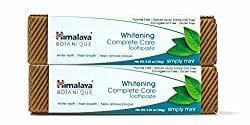 Himalaya Whitening Toothpaste - Simply Mint, Natural, Fluoride-Free & SLS-Free (2 Pack) →
L-Tryptophan
Tryptophan is the raw material for melatonin: your body turns it into serotonin, and the pineal gland turns serotonin into melatonin. Turkey, eggs, dairy, oats, and seeds are good food sources, and some people add a supplement in the evening.
Don’t combine tryptophan with antidepressants (SSRIs, SNRIs, MAOIs) or other serotonin-raising medicines unless your doctor agrees. Together they can push serotonin too high.
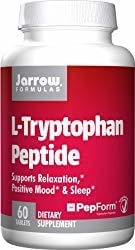 Jarrow Formulas L-Tryptophan Peptide Supplement, for Relaxation, Positive Mood & Sleep, 60 Tabs →
Vitamin K2 (as MK-7)
Vitamin K2 helps direct calcium into bone and away from soft tissue. The human evidence is about blood vessels: in the Rotterdam Study of 4,807 adults, people who ate the most K2 were about half as likely to have severe aortic calcification, and less likely to die of heart disease.[14] No study has looked at K2 and the pineal gland, so treat it as support for calcium balance in general.
MK-7 is the form found in natto, the fermented Japanese soybean dish. If you take a blood thinner such as warfarin, check with your doctor first: vitamin K changes how it works.
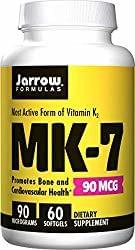 Jarrow Formulas Most Active Form of K2, MK-7 90 mcg, 60 Count →
Chaga Mushroom Tea Chunks
Wild chaga makes an earthy, mellow tea and shows up in a lot of pineal-focused routines. Bonus: the chunks look really cool and are fun to brew.
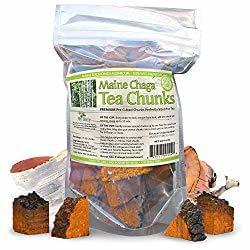 Maine USA Chaga Mushroom Premium Tea Chunks, 4oz, Wild Harvested, 34-50 Servings →
Oil of Oregano
A staple of many cleansing routines. It is very strong: take a drop or two with food, and no more than 5–6 drops at a time.
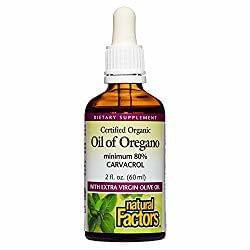 Natural Factors, Certified Organic Oil of Oregano Liquid, 2 oz (374 servings) →
Chlorophyll and Greens
An easy way to get more greens in. Spirulina and other green algae work too, and the best form is a freshly made wheatgrass shot (or two) from a local juice bar.
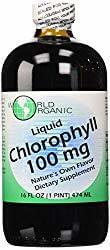 World Organics Chlorophyll Supplement, 100 mg, 16 Ounce →
Apple Cider Vinegar
Many people take apple cider vinegar as a daily tonic. Capsules spare your teeth and throat the acidity of drinking it straight.
 NOW Supplements, Apple Cider Vinegar 450 mg, 180 Capsules →
Neem Leaf Extract
Neem (Azadirachta indica) has been used for thousands of years in traditional medicine, and its leaves contain more than 100 bioactive compounds. Skip it if you are pregnant or trying to conceive.
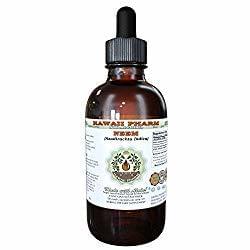 Neem Alcohol-FREE Liquid Extract, Organic Neem Dried Leaf Glycerite, Hawaii Pharm, USA 2 fl.oz →
Books
Becoming Supernatural, by Dr. Joe Dispenza, is a very amazing book to have in your collection.
Dr. Dispenza has been raising awareness about the body’s natural ability to heal, and talks about the pineal gland (notice the pine cone on top of the staff in so much ancient art) as well as other ways to create a very healthy overall body. Very recommended!
 Becoming Supernatural: How Common People Are Doing the Uncommon →
Red Light Therapy: What It Can and Can’t Reach
Red light panels are popular in pineal circles, so it is worth being realistic. Studies that shine light through human skulls find that red light (around 630–660 nm) is almost entirely absorbed by the scalp, skull, and outer layers of the brain, while near-infrared light (around 800–830 nm) travels further.[11][12] No study shows meaningful red light reaching the pineal gland, which sits near the very center of the brain.
Red light therapy has other uses for skin and muscles, and I still use it. For your pineal gland, the light that matters most is the light reaching your eyes: bright days and dark nights.
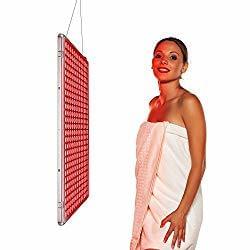 Full Body Red Light Therapy Device in Deep Red (660nm) for Face & Body →
Common Questions
- How do I know if my pineal gland is calcified?
- Only imaging can show it. Calcification shows up on CT scans, usually as an incidental finding when someone is scanned for another reason. There is no home test, and no symptom that is specific to it.
- What causes pineal calcification?
- Age is the clearest factor: it becomes more common every decade.[1][2] Researchers are still working out the rest. Fluoride concentrates in calcified pineal tissue, but whether it drives calcification hasn’t been shown.[6][7]
- Does fluoride calcify the pineal gland?
- Fluoride builds up in the calcified parts of the gland, to levels far higher than in other soft tissue.[6] No study has yet shown that it causes the calcification in the first place.
- Can you reverse pineal calcification?
- Not with any method that has been tested in people.[7] You can protect your melatonin by keeping your nights dark, and lower your fluoride exposure if you want to.
- Does melatonin from a bottle help?
- Melatonin supplements replace the hormone rather than changing the gland. They can help with jet lag and some sleep-timing problems; talk to your doctor about using them regularly.
Summary
The pineal gland has been recognized by human ancestors going back thousands of years as a very important part of your body and brain, and modern research keeps finding reasons to take care of it.
Calcification is common and builds with age. There is no proven way to reverse it yet, but you can protect the melatonin your gland makes by guarding your evenings from bright light, getting daylight in the morning, and keeping your fluoride exposure down if that matters to you.
I hope this guide helps you build a routine for a healthier, happier, more restful life! For ways to support your vagus nerve, see our top resources for vagus nerve health.
Sources
- Admassie D, Mekonnen A (2009). Incidence of normal pineal and choroid plexus calcification on brain CT (computerized tomography) at Tikur Anbessa Teaching Hospital, Addis Ababa, Ethiopia. Ethiopian Medical Journal 47(1):55–60. pubmed.ncbi.nlm.nih.gov/19743781/
- Doyle AJ, Anderson GD (2006). Physiologic calcification of the pineal gland in children on computed tomography: prevalence, observer reliability and association with choroid plexus calcification. Academic Radiology 13(7):822–826. pubmed.ncbi.nlm.nih.gov/16777555/
- Kunz D, et al. (1999). A new concept for melatonin deficit: on pineal calcification and melatonin excretion. Neuropsychopharmacology 21(6):765–772. pubmed.ncbi.nlm.nih.gov/10633482/
- Mahlberg R, et al. (2009). Degree of pineal calcification (DOC) is associated with polysomnographic sleep measures in primary insomnia patients. Sleep Medicine 10(4):439–445. pubmed.ncbi.nlm.nih.gov/18755628/
- Mahlberg R, et al. (2008). Pineal calcification in Alzheimer’s disease: an in vivo study using computed tomography. Neurobiology of Aging 29(2):203–209. pubmed.ncbi.nlm.nih.gov/17097768/
- Luke J (2001). Fluoride deposition in the aged human pineal gland. Caries Research 35(2):125–128. pubmed.ncbi.nlm.nih.gov/11275672/
- Tan DX, Xu B, Zhou X, Reiter RJ (2018). Pineal calcification, melatonin production, aging, associated health consequences and rejuvenation of the pineal gland. Molecules 23(2):301. pubmed.ncbi.nlm.nih.gov/29385085/
- Gooley JJ, et al. (2011). Exposure to room light before bedtime suppresses melatonin onset and shortens melatonin duration in humans. Journal of Clinical Endocrinology & Metabolism 96(3):E463–E472. pubmed.ncbi.nlm.nih.gov/21193540/
- Klein DC (2004). The 2004 Aschoff/Pittendrigh lecture: Theory of the origin of the pineal gland — a tale of conflict and resolution. Journal of Biological Rhythms 19(4):264–279. pubmed.ncbi.nlm.nih.gov/15245646/
- Ekström P, Meissl H (2003). Evolution of photosensory pineal organs in new light: the fate of neuroendocrine photoreceptors. Philosophical Transactions of the Royal Society B 358(1438):1679–1700. pubmed.ncbi.nlm.nih.gov/14561326/
- Tedford CE, et al. (2015). Quantitative analysis of transcranial and intraparenchymal light penetration in human cadaver brain tissue. Lasers in Surgery and Medicine 47(4):312–322. pubmed.ncbi.nlm.nih.gov/25772014/
- Jagdeo JR, et al. (2012). Transcranial red and near infrared light transmission in a cadaveric model. PLoS One 7(10):e47460. pubmed.ncbi.nlm.nih.gov/23077622/
- National Toxicology Program (2024). NTP Monograph on the State of the Science Concerning Fluoride Exposure and Neurodevelopment and Cognition: A Systematic Review. NTP Monograph 08. ntp.niehs.nih.gov/go/fluoride
- Geleijnse JM, et al. (2004). Dietary intake of menaquinone is associated with a reduced risk of coronary heart disease: the Rotterdam Study. Journal of Nutrition 134(11):3100–3105. pubmed.ncbi.nlm.nih.gov/15514282/
This page contains affiliate links through Amazon. If you buy through them, VagusHub may earn a small commission at no cost to you.