Vagus Nerve Stimulation Guidebook
Start with a 2-minute check to see if it's actually your vagus nerve — then a step-by-step plan to calm it down.
Before we talk about what the vagus nerve is, let's answer a more useful question: is it actually your problem?
Most people spend months guessing. As an engineer, that always bothered me — you don't fix a system you haven't measured. So this guide opens the way I wish someone had opened it for me: with a quick check. Seven questions, then two things you can feel for yourself. No equipment. No email required. A few minutes, start to finish.
If your nervous system is stuck on "high alert" — poor sleep, a racing mind, digestion that's off, a body that won't downshift even when nothing's wrong — that pattern tends to show up clearly once you know what to look for. Answer honestly. If it points to your vagus nerve, the rest of this guide walks you through exactly what to do, in order, easiest first. If it doesn't, you'll have saved yourself a lot of wasted effort — and that's a win too.
🩺 The 2-Minute Vagus Check
Pick the answer that's most true for you over the last few months. There are no wrong answers — only honest ones. Your result appears the moment you finish.
1 Most nights, sleep is…
2 After something stressful, I come back to calm in…
3 After a normal meal, my gut feels…
4 My resting heart (calm and sitting) tends to be…
5 Taking a slow, full, satisfying breath is…
6 My voice and throat are…
7 Around people I care about, I feel…
Heads up — we couldn't reach our scorer just now, so here's an instant read from your answers. Refresh and retake to get your full personalized report and the deeper write-up.
🟢 Resilient — your vagal regulation looks steady
Your answers don't point strongly to vagal dysregulation as your main issue. That's genuinely useful to know — it means your effort may be better spent elsewhere first: sleep timing, thyroid, blood sugar, iron, or a specific workup with your doctor.
The tools below are still safe, free, and good for almost everyone — but don't force a vagus-shaped explanation onto a problem that isn't. If a few of these answers creep upward over the next month, come back and re-check.
🟡 Mild dysregulation — a pattern the vagus nerve is often part of
Several systems are drifting in the same direction — that's the kind of pattern the vagus nerve is commonly involved in. You're rarely looking at three or four unrelated problems; more often it's one upstream regulator that's stuck, and the vagus is a common driver.
The good news: it's also one of the most retrainable parts of your nervous system. Start the protocol below at Step 1. In our community, many people notice a first shift within a couple of weeks of daily practice — some sooner, some later.
🔴 High-alert / low vagal tone — a pattern we see a lot
A nervous system stuck on "high alert" — sympathetic ("fight-or-flight") overdrive, a body that won't downshift even when nothing's wrong — commonly produces this cluster. The hopeful part is that this is usually a changeable state, not a permanent trait.
These tools are a safe, free place to start today — and they're not a substitute for a medical workup. A cluster this strong, especially the heart and breathing items, is worth running past a doctor to rule out other causes (thyroid, heart rhythm, anemia, respiratory). Do both: start Step 1 now, and book the check. For many in our community the shift lands somewhere between weeks four and eight — though everyone's different.
Your flagged areas — and where each one starts
This check is a pattern-spotter, not a medical diagnosis. It's built to tell you whether the vagus nerve is worth your attention — the thing most people only figure out after months of guessing. If any symptom is severe, new, or getting worse, see a doctor first.
Show me what to do →📬 Want the in-depth version?
What you just read is the instant read — enough to start today. If you'd like the full work-up, share your email and we'll send you a deeper report, personally reviewed by a human before it reaches you — within about 24 hours. It goes further on what your exact combination of answers means together, the right order to work through your protocol, and the things most people with your pattern miss.
One email with your report, plus the occasional vagus-nerve tip — no spam, unsubscribe anytime. Privacy.
✋ Now feel it for yourself
The quiz is the map. These two 30-second checks are you putting a finger on the actual nerve.
1. The Hum Test
Rest two fingers lightly on the side of your neck, beside your windpipe. Take a breath and hum a low, steady note — a long "mmmmm" — for a few seconds. Feel the buzz? That vibration is traveling along the exact laryngeal branch of the vagus nerve you're about to train. Humming isn't woo — it's mechanical stimulation of a nerve you can literally feel.
2. The Exhale–Pulse Drop
Find your pulse (wrist or neck). Breathe in gently for 4 seconds — notice your heart speed up slightly. Now exhale slowly for 8 seconds — and feel your pulse slow down on the out-breath. That slowing is your vagus nerve acting in real time. It's also why every breathing step below uses a long exhale: you're not just relaxing, you're operating a control you've now proven you have.
🪜 If it points to your vagus nerve: do this, in order
Here's the part most guides skip. Not twenty things to try at random — a ladder. Start at Step 1 today. Don't add the next step until the one below it is a daily habit (usually a few days to a week). Easiest first, on purpose: the early steps are free, take minutes, and do most of the work.
-
1START TODAY
The Long Exhale
Breathe in through the nose for 4 seconds, out for 6–8 seconds, with a short pause at the end of the exhale. Five minutes, three times a day.
The long exhale is the single most reliable vagus lever you have — it's the signal that tells your brainstem the threat is over and the "rest, digest, heal" system can take over. In our community, this one step done daily is usually the first to move people's baseline — often within a couple of weeks, though everyone's different. If you only ever do Step 1, you'll still get something out of it.
-
2ADD THIS WEEK
Hum, Gargle, Sing
One minute of sustained humming after each meal — the test you just did, turned into a habit. Add vigorous gargling when you brush your teeth, and sing in the car.
All three vibrate the laryngeal branch of the vagus and switch on digestion. Free, takes no extra time, and almost impossible to overdo.
-
3YOUR RESCUE BUTTON
Cold on the Face & Neck
Splash cold water on your face, or hold a cold pack against the side of your neck for 15–30 seconds.
This triggers the "diving reflex" — the fastest downshift you have for a moment when you're spun up. Keep it in your back pocket for whenever Step 1 isn't enough in the heat of the moment.
-
4BUILD THE ENVIRONMENT
Anchor Your Day
Now build the conditions that keep tone high: 5–10 minutes of morning sunlight, rhythmic daily movement (even a walk with long exhales), and a consistent wind-down at night.
None of these feel dramatic on their own — but they're what makes Steps 1–3 stick instead of fading after a good week.
-
5ONCE THE FOUNDATION HOLDS
Layer in Tools
Only now — once breath, voice, and cold are daily habits — do devices earn their place, because they amplify a foundation instead of replacing one. In rough order:
- 🌙 Sleep Hypnosis audio — pillow-speaker vagal sleep induction.
- 📿 The Nemuri breathwork pendant — hands-free long exhales, no batteries.
- 🔊 Ultrasound stimulation — the advanced, cutting-edge modality.
Explore these when you're ready — not before.
📈 One tracking tip that keeps people going
Each morning, rate your sleep, energy, mood, and calm on a simple 1–10 scale. You'll often see the line move before your felt sense catches up — and on the hard days, the numbers are what carry you through the first few weeks, which is where the bigger shifts tend to show up for people who stick with it.
🤔 "Couldn't this just be something else?"
Here's the honest answer you deserve: yes. Almost every symptom on any vagus-nerve list has other possible explanations. Poor sleep can be a hundred things. Bloating can be diet. Anxiety can have a dozen causes. If a guide tells you a single nerve explains everything, close the tab.
So why point at the vagus nerve at all? Because of the pattern — not any single symptom. One symptom is noise. But when sleep and digestion and stress-recovery and mood drift together — especially the gut–mood–sleep cluster — you're usually not looking at four unrelated problems. You're looking at one upstream regulator that's offline. The vagus nerve is that regulator, and it's one of the most common reasons this specific constellation shows up together.
That's what the check above was really doing: not diagnosing a symptom, but spotting the constellation. Here's what that constellation tends to look like, grouped by system:
🫃 Gut
Bloating, slow stomach emptying, reflux that resists medication, food sitting heavy, new adult-onset intolerances.
🧠 Mood & brain
Anxiety, low-energy depression, brain fog, depersonalization, feeling "behind glass" around people you love.
💓 Heart & autonomic
Palpitations, low HRV, dizziness on standing, a resting heart rate that won't come down, poor stress recovery.
🗣️ Voice, throat & breath
Hoarseness without infection, a "lump in the throat," swallowing oddities, air hunger, the constant urge to yawn.
Why it's so common now: modern humans show markedly lower vagal tone than populations did a few generations ago — digital overload, processed food, and chronic low-grade stress all suppress the very nerve that's supposed to switch them off. You are not broken. Your "off switch" is just under-trained — and training it is exactly what the protocol above does.
The point was never to pin every problem on one nerve. It's to recognize that when three or four of these cluster together, the vagus nerve is very often part of the picture — and unusually responsive to consistent practice once it is.
💫 The Why: One Nerve, Your Whole Body
You've got your result and your first steps — that's everything you need to start today. The rest of this guide is the why: the anatomy, the science, and the mechanisms behind every step in the protocol. Read it now or come back to it later. It's here whenever you want to go deeper.
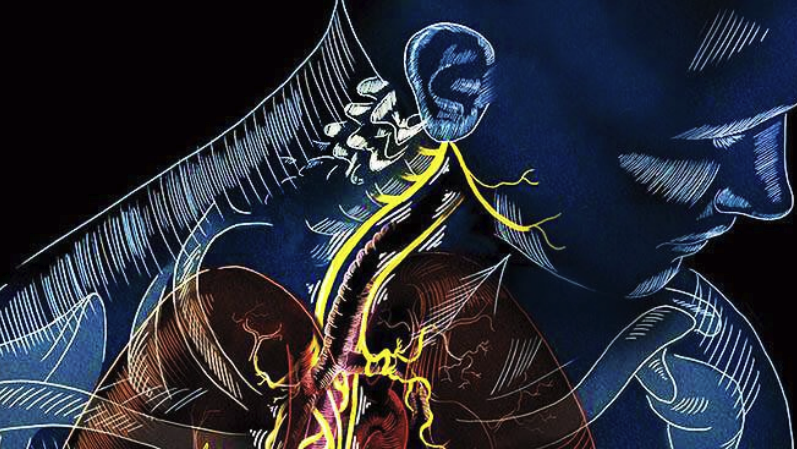
Your Vagus Nerve as the Body's Master Regulator

The Vagus nerve (cranial nerve X) is the longest cranial nerve in your body, stretching from your brainstem all the way down to your colon.
It's the command center of your parasympathetic nervous system — your "rest, digest, and heal" circuitry.
Unlike the stress-driven sympathetic system ("fight or flight"), vagal activation triggers profound physiological calm: slowing the heart rate, optimizing digestion, and reducing inflammation throughout the body. This single nerve is, in many ways, the most powerful regulator of human health that almost nobody knows how to actually work with.
🔬 Five Science-Backed Reasons It Matters
⚡ 1. Halts Chronic Stress & Inflammation
- Sympathetic Overdrive = Modern Epidemic. Chronic stress keeps your body flooded with cortisol, which is linked to hypertension, immune dysfunction, and accelerated aging.
- Vagus to the Rescue. Stimulation slams the brakes on stress chemistry, reducing pro-inflammatory cytokines (like TNF-alpha) and lowering risks for heart disease, diabetes, and autoimmune disorders.
"Vagus stimulation is like hitting a 'reset button' on your nervous system." — Dr. Vernon Williams, Cedars-Sinai
🧠 2. Boosts Brain Health & Mental Clarity
- Neuroprotective Effects. Vagal signaling increases BDNF (brain-derived neurotrophic factor), a protein that repairs neurons and enhances neuroplasticity.
- Cognitive Benefits. Linked to reduced risk of cognitive decline and improved focus by optimizing blood flow to critical brain regions.
- Mood Regulation. Stimulates serotonin and GABA production — explaining its FDA approval for treatment-resistant depression.
💓 3. Optimizes Heart & Metabolic Health
- Heart Rate Variability (HRV). Strong vagal tone = higher HRV, a key biomarker of cardiovascular resilience. Low HRV predicts heart-attack risk.
- Blood Pressure & Glucose Control. Activates baroreceptors that lower blood pressure and improves insulin sensitivity.
🦠 4. Heals Your Gut & Calms "Leaky Gut"
The Gut-Brain Axis Director: 80–90% of vagus fibers carry gut data to the brain. Stimulating it:
- Enhances digestive enzyme release & gut motility.
- Strengthens gut barrier integrity, reducing endotoxin leaks that drive inflammation.
- Boosts beneficial microbes — some probiotics require vagus signaling to exert their anti-anxiety effects.
⚖️ 5. Restores Nervous System Balance
- Resets Autonomic Dysfunction. Critical for conditions like POTS, fibromyalgia, and long COVID, where sympathetic dominance wreaks havoc.
- Enhances "Vagal Tone." Think of this as your stress resilience score. High tone = faster recovery from stressors.
The Anatomy: A Living Superhighway
"The longest cranial nerve isn't just a passive cable — it's a living, vibrating communication network connecting your thoughts to your organs."
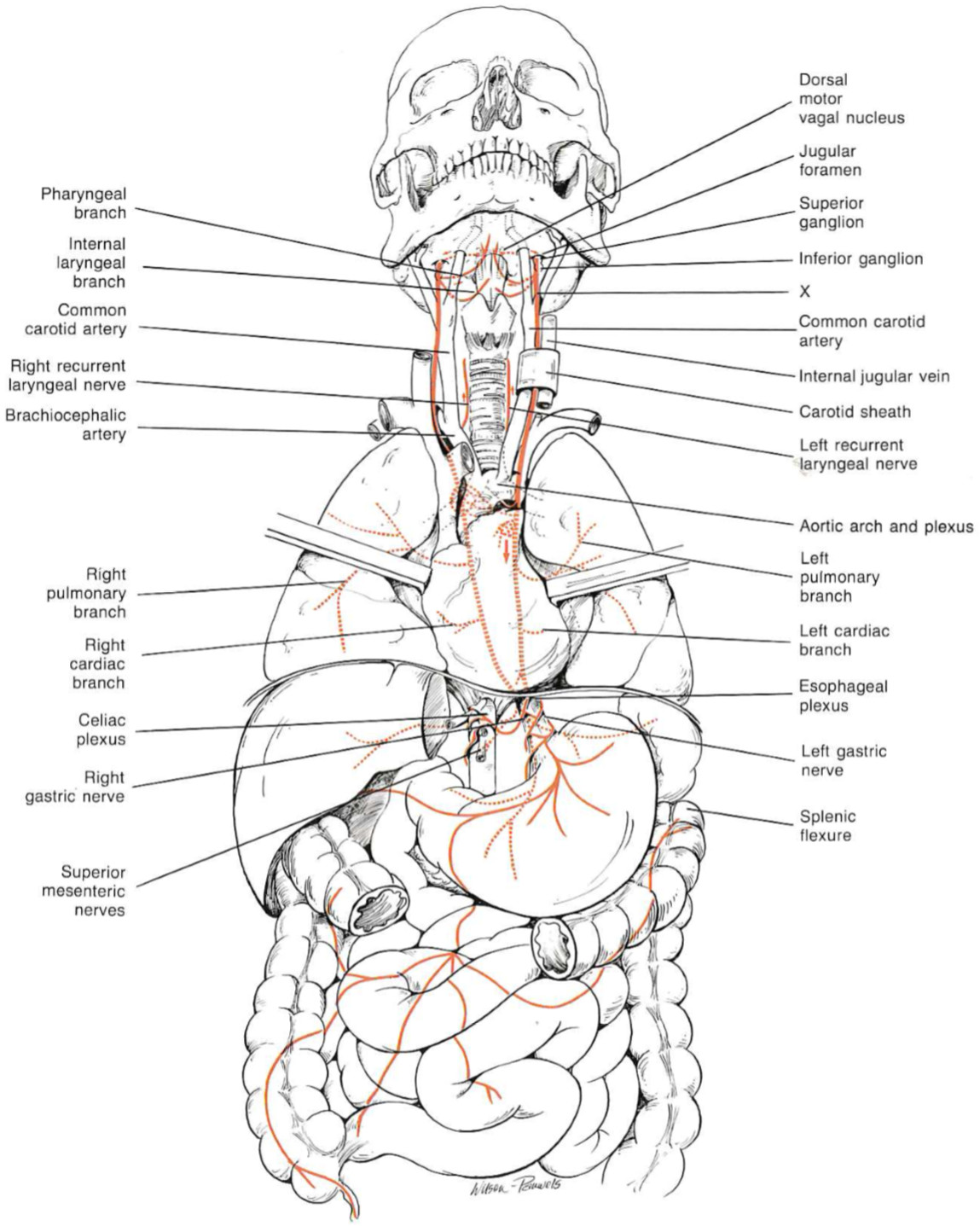
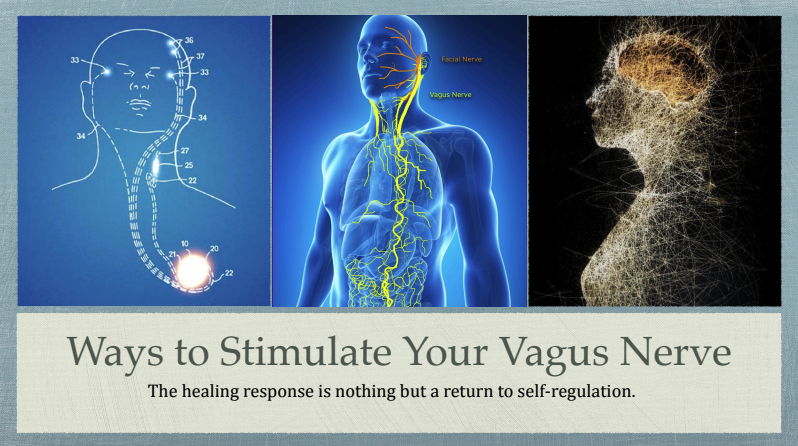
Starting in the medulla oblongata (brainstem), this "wandering nerve" (vagus = Latin for "wanderer") travels through:
- 🦴 Jugular Foramen — the skull exit point
- 👃 Neck — between the carotid artery and jugular vein
- 💓 Thorax — wraps around the aortic arch
- 🌀 Diaphragm — passes through the esophageal hiatus
- 🫁 Abdominal Empire — branches to all major organs
🔁 Bidirectional Traffic System
Brain → Body (Efferent)
Emotional states translate directly into organ function.
Example: Anxiety triggers → ↑ gut permeability ("leaky gut") within 15 minutes.
Body → Brain (Afferent)
Organ status feeds emotional and physical perception.
Example: Gut inflammation activates the brain's fear center (amygdala) before conscious awareness.
⚠️ When "Fight-or-Flight" Becomes Chronic
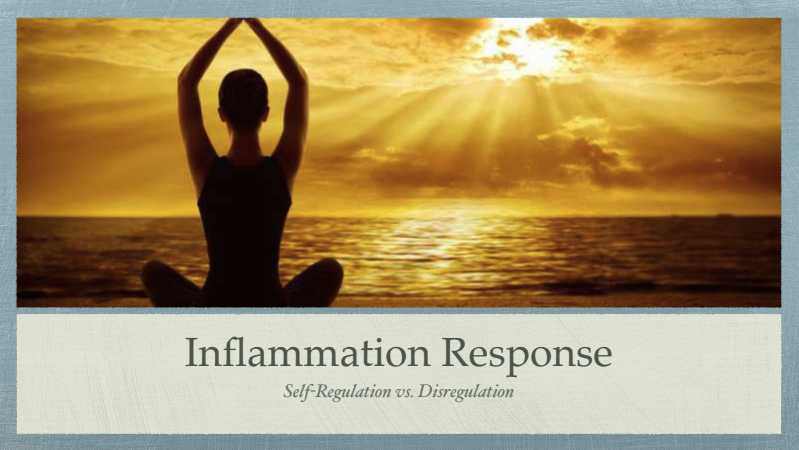
"Modern humans aren't being chased by tigers — we're haunted by emails, traffic, and 24/7 news cycles. Our nervous systems didn't evolve for this." — Dr. Stephen Porges, Polyvagal Theory pioneer
| Sympathetic ("Fight/Flight") | Parasympathetic (Vagus Nerve) |
|---|---|
| ❗ Stress response system | 🧘 Relaxation response system |
| 🔥 Drives inflammation & raises heart rate | ❄️ Lowers inflammation & calms stress |
| 🚨 Emergency alert mode | 🌱 Restful awareness & healing |
🛑 The Cholinergic Anti-Inflammatory Pathway
- The vagus nerve releases acetylcholine, which binds to immune cells.
- This blocks NF-κB (the master inflammation switch), reducing TNF-alpha.
- Proven: the basis of clinical work treating rheumatoid arthritis (Tracey, Nature, 2002).
💡 Key Takeaway
Chronic stress isn't "all in your head" — it's in your cells, organs, and genes. By stimulating your vagus nerve daily, you extinguish inflammation at its source, rewire your stress response from reactive to resilient, and unlock biological regeneration. That's why Step 1 of the protocol is a breathing exercise, not a supplement.
🧠🔄🧬 The Gut-Brain Axis
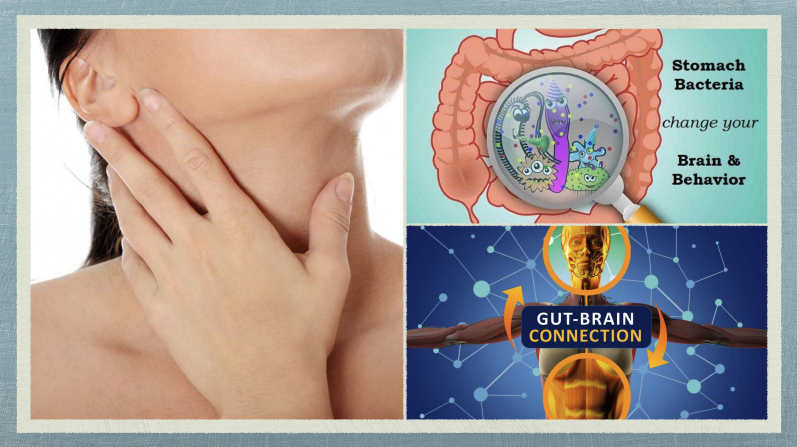
80–90% of vagus nerve fibers carry information FROM the gut → to the brain (not the other way around). The "axis" in "gut-brain axis" is the vagus nerve.
🦠 Microbial Mind Control
- Gut bacteria produce 90% of the body's serotonin and 50% of its dopamine.
- Vagus Bonus: specific probiotics (L. rhamnosus JB-1) require vagus signaling to reduce anxiety (Bravo et al., PNAS).
🍽️ Digestive Orchestra Conductor
The vagus triggers gastric acid release, bile flow, and intestinal contractions — which is exactly why humming after meals (Step 2) aids digestion, and why poor vagal tone shows up first as bloating and reflux.
"Leaky gut → inflammation → neurodegeneration is now linked to Parkinson's, Alzheimer's, and depression via the vagus pathway." — Dr. David Perlmutter, Brain Maker
🌉 Four Critical Crossroads
1. Heart-Brain Bridge
The vagus modulates heart rhythm through the SAN node. Biohack: exhale longer than you inhale to activate it — the mechanism behind Step 1.
2. Gut-Emotion Expressway
Transports gut serotonin (90% of the body's supply) toward the brain. Fact: SSRIs rely on an intact vagus for full effect.
3. Inflammation Surveillance System
Detects cytokines and triggers the cholinergic anti-inflammatory response — the body's built-in fire extinguisher.
4. Metabolic Information Highway
Carries hunger and satiety signals (ghrelin/leptin) between gut and hypothalamus, influencing weight regulation.
💎 Try this now
Place two fingers on your carotid pulse while humming. Feel the vibration? That's your living superhighway at work — the same nerve, the same access point you'll use every day. 🛣️
🌿 The Full Toolbox: 20 Ways to Boost Vagal Tone
You've got the ladder — that's where to start. For the curious, here's the complete toolbox the ladder is drawn from: twenty evidence-linked ways to raise vagal tone, from free daily habits to advanced technology. Pick from here after Steps 1–3 are daily habits.
Daily Habits
- ❄️ Ice Facial — cold exposure to face/neck triggers the diving reflex.
- 🎶 Sing / Hum / Chant — vibrates the laryngeal vagus branches.
- 🧘 Slow Breathing — 4 sec IN → 6 sec OUT (resets autonomic balance).
- ☀️ Sunlight Exposure — 5–10 min of morning light regulates circadian vagal tone.
- 😆 Laughter Therapy — natural bursts enhance cardiac vagal modulation.
Body Practices
- 🧘♀️ Yoga Poses — Cat-Cow, Downward Dog stimulate vagal afferents.
- 💆 Massage — focus on neck/sternum vagus pathways.
- ⚡ Acupuncture / Acupressure — target PC6 (inner wrist) and ST36 (leg) points.
- → Right-Side Sleeping — optimizes vagus positioning + deep breathing.
Lifestyle Boosters
- 🥬 High-Fiber Diet — feeds butyrate-producing gut microbes.
- 🦠 Probiotics — strains like L. rhamnosus require vagus signaling.
- 🚶♂️ Exercise — rhythmic movement increases heart rate variability.
- 🧠 Meditation — increases prefrontal-vagal connectivity.
- 🤝 Social Connection — loving exchanges trigger the "vagal brake."
Advanced Techniques
- ⏳ Intermittent Fasting — 14+ hours nightly enhances vagal neurotransmission.
- 👂 Auricular Vagus Stimulation — electrical/magnetic ear-clip devices (FDA-cleared).
- 🌀 Spleen Ultrasound — targeted pulses reduce TNF-α inflammation.
- 🧠 Insular Cortex Ultrasound — focused waves disrupt neuroinflammation patterns.
- 🔊 Cervical Vagus Ultrasound — non-invasive neck stimulation with body-wide effects. (See our full ultrasound guide.)
- ⚡ Vibration Tech — wearables modulate vagal tone via resonance frequencies.
💎 The New Paradigm
The twenty methods above work synergistically — but they only compound on top of a foundation. That's why the protocol is a ladder, not a buffet. Master the free basics first; then these become accelerants instead of distractions.
✨ Where to Go From Here
You now have more than most people get after months of searching: a read on whether this is your problem, two ways to feel the nerve yourself, and a daily plan in order of difficulty. The next move is simple — do Step 1 today. Five minutes. Right now, if you can.
When you want to go further, these pages pick up where the protocol leaves off:
 Join Our Free Facebook Group
Read it in one sitting, then come share what your check turned up — that's where the real conversations happen, and I read them.
📬 Stay in the loop, wherever the internet goes
Groups get shut down and algorithms change. The newsletter is how we stay in touch no matter what: new research in plain English, protocols that are working, new free guides and audio, and the occasional note from me. No daily emails.
Free. Unsubscribe anytime with one click. We never sell or share your address. Privacy
Welcome to the work. Your nervous system has been waiting for this.