What Are the Benefits of Vagus Nerve Stimulation With Ultrasound?
What is Ultrasound Vagus Nerve Stimulation?
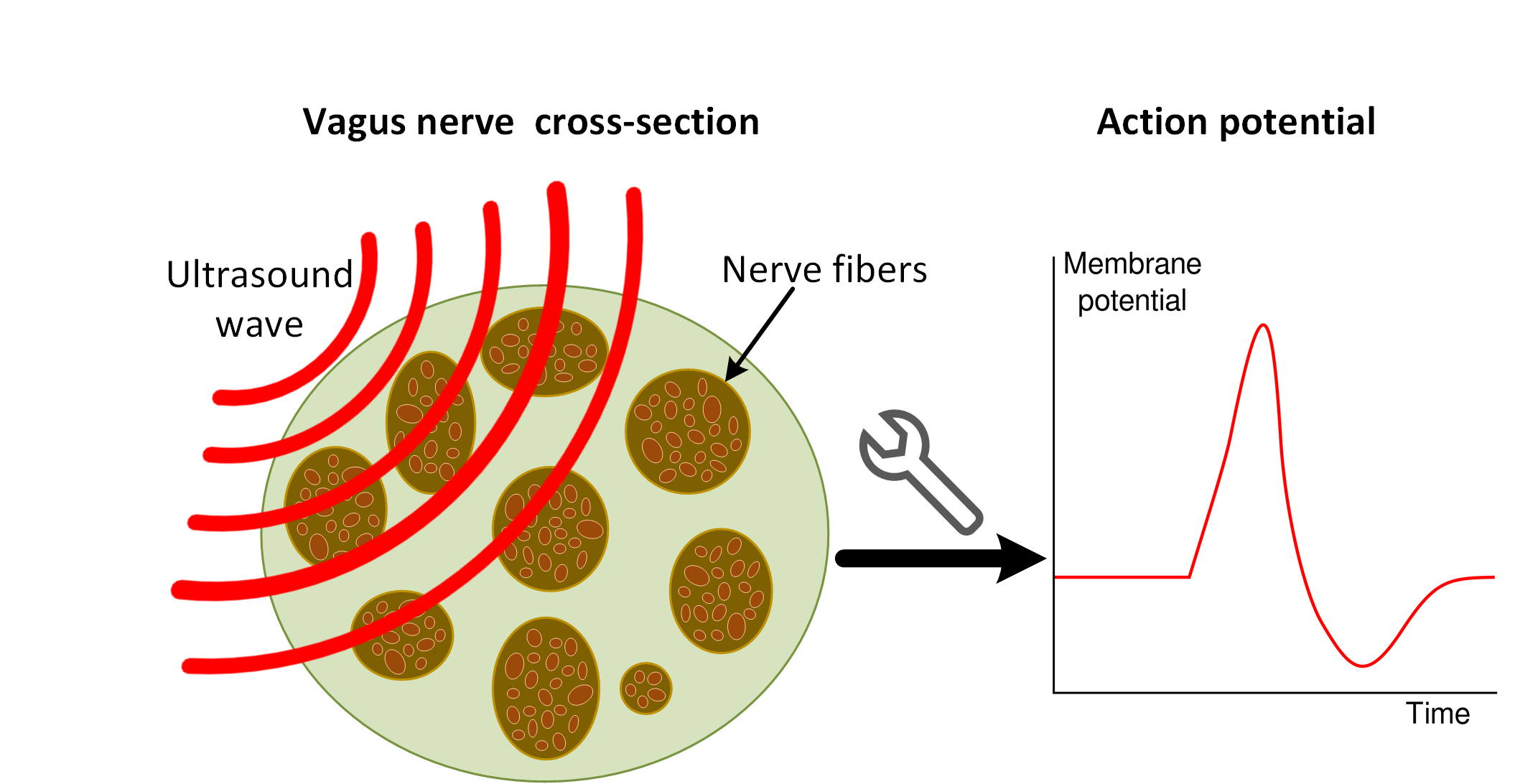
Typically referred to as uVNS to shorten it, this is a modality of stimulation that has many benefits for increasing parasympathetic function in the human body. It uses focused, low-intensity ultrasound — the same general physical principle behind a prenatal sonogram, but tuned and shaped for neuromodulation rather than imaging — directed at the cervical branch of the vagus nerve in the side of the neck.
Using high-frequency sound waves, we can now selectively stimulate neurons throughout the body in a way that no electrical method can quite match. Ultrasound penetrates tissue cleanly, can be focused down to a small target volume, and does not require any electrical contact with the skin. This makes it uniquely suitable for stimulating a deep, mobile, well-protected nerve like the vagus.
Ultrasound as a tool to elicit neuronal excitation is actually quite old.
Beginning in the 1950s and 60s, in both the United States and the USSR, researchers learned about the power of focused ultrasound on central neurons in the brain and on peripheral neurons in the arms and legs — both could be reliably stimulated with tiny burst tones of ultrasound. The work was driven partly by curiosity and partly by Cold War interest in non-invasive ways to influence neural tissue. Some of the foundational papers from that era are still surprisingly hard to find in English; they're cited in modern reviews but rarely read directly.
This technology has since evolved and grown into quite a sophisticated therapeutic intervention. The hardware is smaller. The waveform shaping is far more precise. We now understand much more about why ultrasound stimulates neurons in the first place — primarily through mechanotransduction at ion channels embedded in the neuronal membrane, with some additional contribution from local thermal and cavitation effects.
Ultrasound is now being used to image the brain in real-time, replacing expensive fMRI machines at a fraction of the cost and size. It is being utilized to treat inflammatory disorders, to non-invasively ablate small tumors, to break up kidney stones, and (during the COVID-19 era) to support recovery from severe respiratory inflammation with notable success in early case series.
What Is Being Stimulated?
Neurons are being stimulated to "activate" — in roughly the same sense that a muscle contracts when you consciously control it. The cell membrane depolarizes, an action potential fires, and the signal propagates down the axon to its target. This is the same fundamental event that happens whenever you think a thought, move a finger, or digest a meal. We are simply triggering it on demand at a chosen location.
The Vagus Nerve is a massive bundle of neurons that runs from your brain stem, down through your neck, and into your chest and abdomen. In the cervical region — the area we target with ultrasound — it runs alongside the carotid artery and the internal jugular vein, encased within the carotid sheath. It's deep enough to be well protected from accidental stimulation, but accessible enough that a properly aimed ultrasound transducer can reach it without difficulty.
When we stimulate these neurons, we cause them to fire and send signals upstream to the brain (and downstream to the heart, lungs, and gut). About 80% of vagal fibers are afferent — meaning they carry information from the body up to the brain — so most of the effect of cervical vagal stimulation is fundamentally an upstream signaling event. The brain hears from the vagus, and the brain in turn shifts its global state toward parasympathetic dominance.
These signals tell the brain to activate the Parasympathetic Nervous System, which is responsible for "rest and digest" functions: deeper breathing, slower heart rate, increased gastric motility, lowered inflammatory output, and the broad shift toward repair and recovery that the body cannot perform when it is in a sympathetic ("fight or flight") state.
Why Ultrasound Specifically — Versus Electrical or Implanted VNS?
This is a question we get often, and it's worth answering directly. There are three established ways to stimulate the vagus nerve clinically:
- Implanted VNS. A surgically placed device wraps a wire electrode around the vagus nerve in the neck. This is FDA-approved for treatment-resistant epilepsy and depression. It works, but it requires surgery, has a battery to replace, can cause hoarseness and other side effects, and is irreversible without a second surgery.
- Transcutaneous electrical (tVNS). Devices that clip onto the ear and stimulate the auricular branch of the vagus nerve electrically. Non-invasive and increasingly available. The downside is that the auricular branch is a relatively small and indirect target, and the depth of effect is more limited than direct cervical stimulation.
- Ultrasound (uVNS). Non-invasive, targets the much larger cervical vagus nerve directly, and avoids the skin-sensation issues that come with electrical stimulation. The downside is that the hardware is more specialized and the protocol requires accurate targeting.
For most of the people we work with, ultrasound hits the right point on the curve: meaningful depth and target size, no surgery, no electrodes on the skin, and a session length (typically 5–15 minutes) that fits cleanly into a daily practice.
What a Typical Session Looks Like
For people who haven't seen one in person, a uVNS session is much less dramatic than the words "neurostimulation" might suggest. The user (or a coach) places a small amount of ultrasound gel on the side of the neck, positions the transducer over the cervical vagus, and runs a 5 to 15 minute waveform program. The sensation, if anything, is a faint warmth or a very mild tingling. Most people report feeling pleasantly relaxed within a couple of minutes — heart rate slows, the breath naturally deepens, the shoulders drop.
By the end of a session, it is common for people to feel "softer" — less mentally cluttered, less braced in the body, with a noticeable easing of any background tension they had been carrying without realizing it. The effect tends to last several hours acutely, with cumulative changes building over weeks of regular sessions.
Benefits of Vagus Nerve Stimulation:
- Improved mood
- Loss of anxiety
- Weight loss
- Better social skills
- Lowered insulin resistance
- Normalized blood sugar levels
- Decreased pain
- Improvement in cognitive function & ability
- Better memory
- Elimination of insomnia
- Improved sleep
- More vivid dreams
- Massive reduction in tinnitus ringing
- More vocal melody when speaking
- Less monotonous speaking style
- More meditative & mindful thinking style
- Reduction in stress
- More salivation
- Better digestion
- Relaxed facial expression
- Reduction in facial tension
- Reduction of TMJ pain
- Increased hopefulness
- Better reaction to stressful events
- Decreased circulating TNF inflammatory cytokines
- Reduction in sugar cravings
- Better executive & problem solving ability
- Deeper breathing
- More variable heart rate
- Stronger muscle tone
- Decreased musculoskeletal weakness
- Reduced neck & shoulder pain
- Increased focus
- Increase in BDNF (Brain Derived Neurotrophic Factor)
- Increased growth in hippocampus and memory processing centers
- Reduced fear
- Increased confidence in self
- Enhanced future projection & visualization ability
- Reduction in negative self talk
- Increased sexual function
- Increase in sexual desire, and libido
- Reduction in anti-depressant caused erectile dysfunction
- Increase in female sexual function
- Normalization of female period cycle
- Reduction in some symptoms of PMS
And the list can go on, and on.
Safety Profile
Diagnostic and low-intensity therapeutic ultrasound has one of the longest, cleanest safety records of any medical technology in modern use. We have used it on developing fetuses for half a century. We use it routinely on injured tendons, on the deep musculature of athletes, and on the carotid arteries of cardiology patients. The intensities and waveforms used for vagal neuromodulation sit well within parameters that have been studied across many decades.
The two practical concerns to be aware of:
- Targeting matters. Stimulating off-target tissue is unlikely to be harmful, but it is also unlikely to produce the intended parasympathetic shift. Accurate placement is the difference between a great session and a session that does nothing.
- Dose matters. More is not better. We've seen people try to "ramp up" intensity hoping for a stronger effect, and what they typically produce is a temporary headache and a slight irritation of the surrounding tissue. The protocol parameters we recommend are deliberately conservative, and have been refined across years of client work.
For people with implanted electrical devices (pacemakers, deep brain stimulators, cochlear implants), or for those who are pregnant, the conservative recommendation is to consult their physician before starting any neurostimulation modality.
Citations
Visit our Citations page for the underlying primary research on focused ultrasound neuromodulation, vagal stimulation outcomes, and the broader field.
Conclusion
Ultrasound has proven itself, time and time again, to hold remarkable potential to restore proper function to central and peripheral neurons in the human body. It is a technology with a long history, a clean safety profile, and an unusually good fit for the specific job of stimulating the vagus nerve non-invasively.
While it may seem as if this is a "new" technology, it's actually very old and widely accepted as incredibly safe to use in and on the human body. The novelty isn't the modality itself — it's the application of focused, neuromodulation-grade ultrasound to a specific peripheral nerve target. That is what's new, and that is where the practical impact is starting to show up.
What we have found to be most important is how one uses ultrasound. The same hardware in the hands of two different people can produce two very different outcomes — one transformative, one indistinguishable from placebo — depending on placement, dose, session frequency, and how it's combined with the rest of the person's daily nervous-system practice.
Our closing recommendation in selecting an ultrasound device for stimulating your vagus nerve is to work with a practitioner, as they can fine-tune a treatment protocol for you. The basics are learnable, but the nuances — particularly for people with complicated histories of chronic illness, autonomic dysfunction, or trauma — really do benefit from someone with miles on the clock guiding the early sessions.
Some people respond to ultrasound very quickly, within 15 minutes of their first stimulation. Some people have incredibly vivid dreams within their first week of starting a protocol. Others take three to four weeks before the cumulative shift becomes obvious. All of these patterns are normal; none of them is a problem.
This has everything to do with using a protocol that has been validated before and that matches the client's specific symptom profile. A protocol designed for digestive recovery looks different from a protocol designed for sleep restoration, which looks different again from a protocol focused on emotional regulation. They share underlying parameters, but the specific session structure and the way they're sequenced over weeks varies.
If you would like to learn more about the full scale of uVNS and how it combines well with other forms of health and wellness practices, you can visit our Ultrasound Ordering page and read about availability and what all is included in the VNS V1 Kit. We've intentionally kept the entry-level kit accessible, because we'd rather have more people doing this work properly than fewer people doing it perfectly.
Click Here for More Details on the UVNS Technology Get Access to the VNS&R Ultrasound V1 Technology and Guidebook