The Nemertean Vagus Nerve Origin Theory
What Is The Nemertean Vagus Nerve Origin Theory?
This theory briefly states that the human Vagus Nerve has its evolutionary origins in the same Proboscis found inside of the famous Nemertean flat-worm — better known as the "ribbon worm."
We will lay out the implications, the supporting data, and the falsifiability tests that could prove this theory invalid or incorrect. This is a theory, not a doctrine. We want it tested. We want it stress-tested. And we want anyone with the right lab access to take a hard swing at refuting it.
We highly encourage readers and scientists to perform experiments to help refute and falsify this theoretical framework for understanding how the Vagus Nerve arrived inside the mammalian body some 500 million years ago. The standard evolutionary story — that the vagus nerve "just gradually appeared" alongside the gill arches in early jawed fish — has always struck us as conspicuously hand-wavy. There is a discontinuity in the fossil and genetic record at exactly that point that nobody has cleanly accounted for.
What Evidence Do We Have So Far?
Our primary evidence is RNA expression data taken from the Proboscis of the Nemertean worm, and a comparison of those RNA segments to homologous segments found on the mammalian side — particularly within the Vagus Nerve itself.
We will list out the data below, and you will also understand — through what we call the "falsification tracks" — how we are thinking through this unique problem and theory. The goal isn't to convince you the theory is right; the goal is to give you a clear enough picture that you can decide for yourself whether the comparisons are doing real work or whether they are a coincidence.
Beyond the RNA, we believe there are observable functional similarities between the behavior of the Proboscis and that of the Vagus Nerve, which we will also detail below. Both are extensible, both have an outsized role in regulating the organism's interior chemistry, and both seem to operate on a kind of independent rhythm that the rest of the body merely hosts.
Lastly, we believe there is evidence of an evolutionary / consciousness / "Quantum Pleasure Principle" type of pressure mechanism that allowed — or even encouraged — this strange and rather sci-fi pairing of a worming proboscis and a fish body to occur. More on what we mean by that in a section below.
What is the RNA Evidence Showing a Potential Link Between the Nemertean Proboscis and the Human Vagus Nerve?
A study was performed on the proboscis of the Nemertean worm, and it found that the proboscis had unique functions which: 1) overlap directly with functions of the human Vagus Nerve, and 2) when analyzed using unique RNA codes — COCA1, RADI, VWF, and others going down the list — showed an incredible number of "matches" to the Pig RNA atlas (which is one of the closest mammalian models we have available for vagal-tissue gene expression).
I will post a number of these "matches" and explain further below. The original research came from this paper: Evolution, Expression Patterns, and Distribution of Novel Ribbon Worm Predatory and Defensive Toxins — Verdes et al., 2022.
https://www.ncbi.nlm.nih.gov/pmc/articles/PMC9132205/
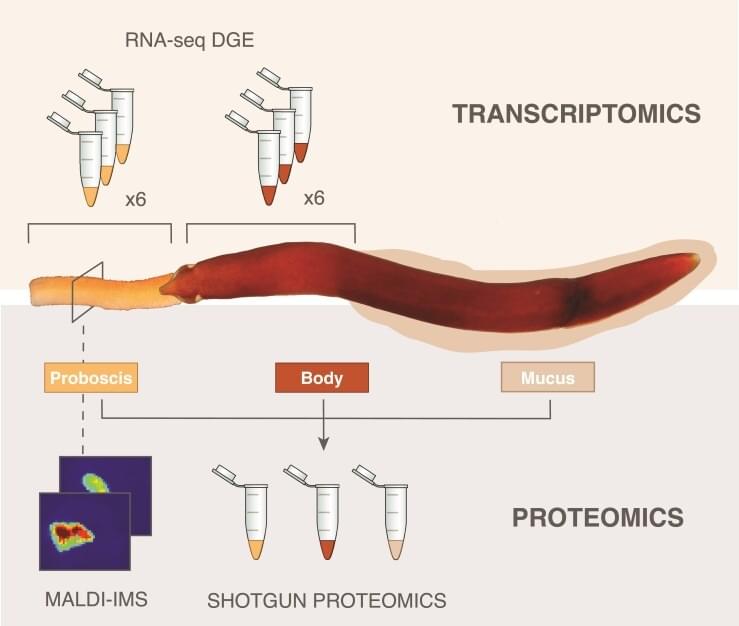
The Above Study Found a Significant Number of Matches That Align with Functions of the Vagus Nerve
Below, the proboscis was analyzed, and you can see how a number of the functions of the proboscis are described — digestion, immune response, secretion, cell adhesion — all of which are functions that are quite important in the Vagus Nerve.
But how overlapping can these things really get? Scroll down to see the results from the RNA Atlas: https://www.rnaatlas.org/
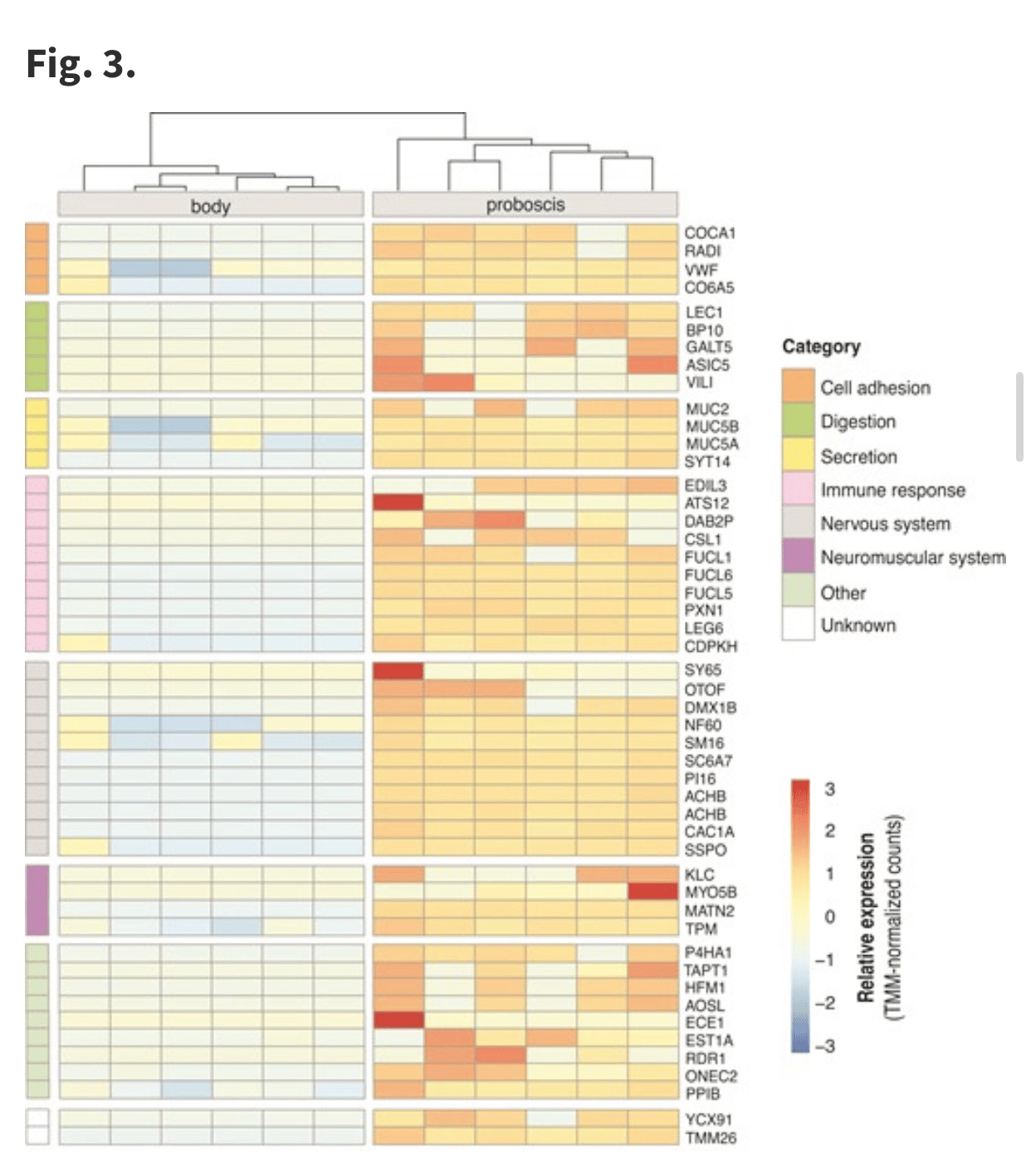
The RNA Atlas Results Match Overwhelmingly
Let's look at the RNA segment names on the right side of the "proboscis" column. The first sequence is titled COCA1 — which is a repeating segment of RNA that has been given a name.
Here's what it looks like when you run that through the RNA Atlas:
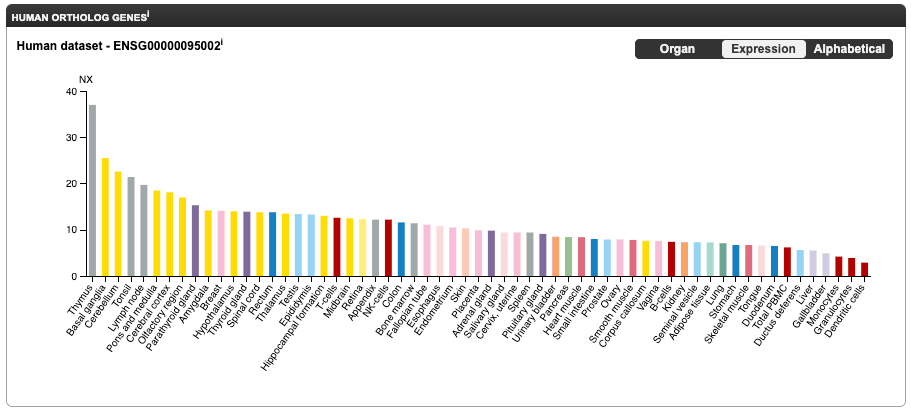
COCA1 — Representing Cell Adhesion — Is a Match in Humans
Taken as a single match, it's not substantial. A single hit is just a single hit. But the picture changes when you start lining up the rest of the codes from the proboscis sample alongside their human / mammalian homologs.
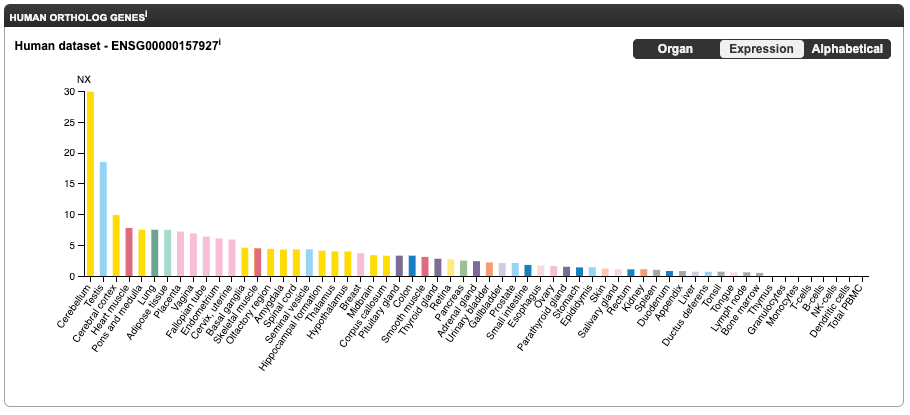
RADI codes for radixin, which in mammals is essential for the membrane–cytoskeleton adhesion that makes long, fast-conducting nerve fibers physically possible. Finding it expressed strongly in the proboscis of an organism that supposedly has no nerves of that kind is not what you'd predict if the proboscis and the vagus nerve had nothing to do with one another. Add VWF, which clusters around vascular and adhesion-related processes in mammals, and the pattern starts to get hard to ignore.
Functional Parallels Between Proboscis and Vagus
Even setting the RNA work aside, the behavioral parallels are striking. Consider what each structure actually does:
- Eversible / extensible. The Nemertean proboscis everts at high speed to capture prey. The vagus nerve, while not anatomically eversible, transmits signal pulses at extraordinarily high speed across long distances and is the body's primary "rapid response" pathway for parasympathetic regulation.
- Toxin and neurotransmitter release. The proboscis releases a cocktail of bioactive compounds. The vagus nerve releases acetylcholine and influences serotonin, dopamine, and a long list of downstream neuroendocrine signals throughout the gut.
- Independent semi-autonomy. The proboscis appears to operate with a striking degree of independence from the rest of the worm. The vagus nerve / enteric nervous system has often been called a "second brain" precisely because it processes and acts on information without conscious involvement from the cortex.
- Regenerative capacity. Nemerteans are famous for their regenerative ability. The vagus nerve is one of the few cranial nerves with documented capacity for partial regeneration in mammals — far more than most peripheral or cranial nerves.
- Chemosensation and visceral sensing. The proboscis is dense with chemoreceptors. So is the vagus, particularly its afferent fibers, which monitor gut chemistry, blood gases, and inflammatory signaling and pipe that data back up to the brainstem.
The "Quantum Pleasure Principle" Mechanism
Why would a proboscis-like structure get incorporated into a fish body in the first place? Standard Darwinian framing would say "selection pressure rewarded the fish that did better with such a structure." That's true but circular. Our suggested mechanism — provisional, speculative, and clearly labeled as such — is what we call the Quantum Pleasure Principle.
The basic idea is that any nervous tissue capable of generating a strong reward signal — a "this feels good, do it again" pulse — will, over evolutionary time, get integrated, preserved, and elaborated by whatever organism manages to host it. The proboscis, in this framing, isn't merely a hunting tool; it's a structure capable of generating large-amplitude reward signaling. Once a fish lineage incorporated it (perhaps by symbiosis, perhaps by horizontal genetic transfer through gut absorption of the worm itself, perhaps by something stranger), the host got the benefit of an entire pre-built reward and visceral-regulation circuit, and selection did the rest.
Is this provable in 2024? No. Is it the kind of thing that could in principle be tested with the right combination of comparative genomics, lineage analysis, and developmental biology? We think so, and that's the only thing that matters.
Falsification Tracks to Follow
This is the section we care about most. A theory that can't be falsified isn't science. Here are the specific empirical results that, if found, would significantly weaken or kill the Nemertean Vagus Nerve Origin Theory:
- RNA data showing the Vagus Nerve is not a descendent of the Nemertean proboscis. Specifically, a high-resolution comparative analysis showing that the apparent matches in COCA1, RADI, VWF, and similar segments are statistically no different from baseline matches between any two random mammalian and worm tissues.
- Cutting the Vagus Nerve in a healthy mammal should result in a regrowing of the Vagus Nerve, just as the Proboscis is able to fully regenerate. If repeated, careful surgical studies show essentially no regenerative capacity in the mammalian vagus, that weakens the theory.
- The human "freeze" response that happens when a predator or startling event occurs should be mitigated when the Vagus Nerve is suppressed (e.g. via surgical block, controlled pharmacological inhibition, or vagotomy patient observation). If freeze responses persist unchanged in vagotomized subjects, the theory loses an important pillar.
- The Nemertean proboscis should have a fast-acting myelination feature, as well as similarly structured microtubule networks as the human Vagus Nerve. If the cytoskeletal architecture turns out to be completely unrelated, the homology argument weakens substantially.
- Developmental / embryological lineage tracing should show that the embryonic origins of the vagus nerve trace back, at the level of conserved gene regulatory networks, to a structure homologous to the proboscis. If the developmental cascades turn out to be entirely independent inventions, that's another major strike against the theory.
If any of the above is decisively shown, we will publicly update this page and revise the theory. That is the standing commitment.
List of the Collected Benefits of Vagus Nerve Stimulation
Even setting aside the evolutionary speculation, the practical benefits of stimulating a properly functioning vagus nerve are now well documented. Here is the working list we maintain for clients in our Vagus Nerve Stimulation & Repair Program:
- Improved mood
- Loss of anxiety
- Weight loss
- Better social skills
- Lowered insulin resistance
- Normalized blood sugar levels
- Decreased pain
- Improvement in cognitive function & ability
- Better memory
- Elimination of insomnia
- Improved sleep
- More vivid dreams
- Massive reduction in tinnitus ringing
- More vocal melody when speaking
- Less monotonous speaking style
- More meditative & mindful thinking style
- Reduction in stress
- More salivation
- Better digestion
- Relaxed facial expression
- Reduction in facial tension
- Reduction of TMJ pain
- Increased hopefulness
- Better reaction to stressful events
- Decreased circulating TNF inflammatory cytokines
- Reduction in sugar cravings
- Better executive & problem solving ability
- Deeper breathing
- More variable heart rate (improved HRV)
- Stronger muscle tone
- Decreased musculoskeletal weakness
- Reduced neck & shoulder pain
- Increased focus
- Increase in BDNF (Brain Derived Neurotrophic Factor)
- Increased growth in hippocampus and memory processing centers
- Reduced fear responses
- Increased confidence in self
- Enhanced future projection & visualization ability
- Reduction in negative self talk
- Increased sexual function
- Increased libido
- Reduction in anti-depressant caused erectile dysfunction
- Normalization of female period cycle
- Reduction in some symptoms of PMS
Citations
For the underlying scientific references — research papers, clinical studies, and supporting work — please see our citations page:
Conclusion
The Nemertean Proboscis is, in our view, the missing link that explains how the Vagus Nerve seemingly "appeared" in fish — giving rise to rapid lung development through Respiratory Sinus Arrhythmia, allowing lungfish to breathe air, and ultimately allowing fish to walk on land.
We also believe that the proboscis of the Nemertean worm is itself a quasi-conscious structure, and may carry its own form of awareness semi-separate from the host worm. That second claim is, admittedly, much further out on the limb than the RNA argument, and we list it here only because it logically follows from the rest of the framework. If the proboscis is the evolutionary precursor of the vagus nerve, and the vagus nerve appears to carry something we recognize as semi-autonomous "gut wisdom," then by parsimony the proboscis is doing something equivalent in its own much smaller way.
None of this changes how to use your vagus nerve in daily life. It only changes how you might think about what you are using when you slow your breathing, hum on the exhale, or place an ultrasound probe at the side of your neck. You may not just be calming a cranial nerve — you may, on a long enough timescale, be quieting an ancient predator that decided, half a billion years ago, that it would prefer to be a passenger.
That's it! For now!